Recently on Bloomberg News, CBO’s (Congressional Budget Office’s) Director Phillip Swagel appeared, voicing concerns about our rapidly rising $39 Trillion Dollar National Debt, also discussing the CBO’s Emergency “Break Glass” Plan intended to counter the “Next Economic Shock” which can be viewed at https://www.crfb.org/papers/break-glass-plan-next-economic-shock
On March 17, 2026, the gross national debt exceeded $39 trillion for the first time and the CBO estimates that gross debt will rise to $63.7 trillion by the end of Fiscal Year (FY) 2036. Also, the yearly deficit in fiscal year 2026 totals $1.9 trillion and will grow to $3.1 trillion in 2036. Relative to the size of the economy, the deficit is 5.8 percent of gross domestic product (GDP) in 2026 and will increase to 6.7 percent in 2036.
What this author suggests, in addition to the CBO’s well thought-out “Break Glass” Plan and similar plans involving adjustments (spending cuts) and tax increases to the Federal Budget is to also take steps to make sure our Treasury Bond Market, in the meantime and in lieu of our present budget overruns and annual deficit of $1.9 trillion for this year and projected to increase to a whopping $3.1 trillion by the year 2036, that it continues to be able to provide the required funds for Our National Budget, any overruns and for payouts of Treasuries not being renewed (especially in view of recent events) as this “Break Glass” Plan or similar plan is implemented.
Just to review events of the past year beginning with Trump’s April 2nd Liberation Day multi-nation tariffs when, on the same day, the stock market crashed and China and Japan, our biggest foreign government bondholders, threatened to dump their Treasury bonds, causing Treasury yields to “shoot up” while stocks plummeted—the exact opposite of what one would expect when the stock market “takes a dive” with Moody’s dropping their Triple-A (AAA) rating for the U.S. to a Double-A (AA) rating reflecting loss of confidence in the Dollar which brings us to the “crux of the matter” —Is there anything we can do to prevent The Treasury from running out of money and not being able to cover current expenses and payouts on maturing Treasury debt becoming due and even more importantly keeping The Dollar from losing its status as The World’s Reserve Currency while the problems of Our Economy are addressed??
Now, one way “to fill the void left by disenchanted governments” because of China’s and Japan’s (our two biggest bondholders) threat to sell their Treasuries and to prevent a potential WHOLESALE bond sales threat by a collective of foreign nations should such ever materialize, as Author Ellen Brown opines, “The rapidly expanding stablecoin market is projected to be able to fill the void left by disenchanted governments that are dumping Treasuries and “de-dollarizing” in response to Western sanctions and U.S. tariffs.”
As Author Ellen Brown further explains stablecoins “are cryptocurrencies that are backed by safe assets (e.g., short-term U.S. Treasuries).” And that, “As of March 2025, their total market capitalization reached $232 billion, a 45-fold increase since December 2019. Projections suggest this figure could hit $400 billion by year-end and as much as $2.8 trillion by 2028 with a further projection of $3 trillion by 2030. Treasury Secretary Scott Bissent also asserts, “stablecoins are a strategic tool to ‘lock in dollar supremacy’.”
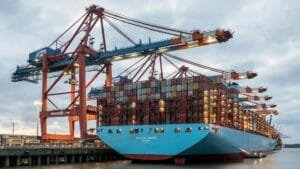
Another way “to fill the void left by disenchanted governments” should Stablecoin use not be enough (by itself) to fully keep up with our expanding National Debt, as this author suggests, would be to require (domestic) importers to purchase U.S. Treasuries with a certain percentage (say 10 percent) of their sales when importing goods here–therefore, in essence, creating a NEW 3rd class of U.S. Treasury purchasers!!
As it stands now, there are two (2) main groups of bond purchasers–domestic institutional investors such as banks, retirement-pension funds and insurance companies, with the second class of large-scale bond purchasers being foreign governments. But because of their present concern over our rising National Debt, they are now buying less and are also investing more in developing their own country’s infrastructure and economy and that of their trading partners. A prime example being China’s Belt and Road Initiative.
But with a large-scale third class of U.S. Bond purchasers also being required to be a MANDATORY class of purchasers, this would stabilize the U.S. Bond Market giving “guaranteed” relief and confidence to domestic institutional investors and foreign governments AS WELL! This way, there would always be, as a result of this New 3rd class of bond buyers, the required minimum of cash reserves The Treasury would need to make scheduled payments and for current government expenditures coming due. This, alone, would stabilize the bond market and act as a “hedge” against (AND ALLAY) any fears causing large scale selloffs or future non-purchases of U.S. Treasuries by foreign governments or domestic investors fearing a loss of value to their investment!!
Also, with this New 3rd class of bond buyers and this is VERY IMPORTANT, the Treasury would be less dependent on their bond auctions not having to sell as many Treasuries otherwise not “being put in a position” to sell at higher yield rates to meet their quota thereby saving on debt servicing costs!!! Just to give an example, our debt servicing costs on outstanding bonds this year was a trillion dollars!! If the Treasury was forced to pay higher yields, debt servicing costs could soar to over 2 trillion per year!!
Now with The Supreme Court’s recent ruling on Trump’s reciprocal tariffs as being unconstitutional in that it’s actually a tax and therefore solely within purview of Congress, The Court struck down Trump’s authority to impose tariffs through the International Emergency Economic Powers Act (IEEPA). except for limited exceptions under Section 232 used for national security such as tariffs levied on aluminum, steel and copper, to guarantee continued national production.
Another exception allowed was under Section 301 to employ tariffs against countries having “discriminatory” or “unfair” trade practices including currency manipulation and government funding of industries producing exports to other nations. However, limitations within Section 301 mean Trump cannot use this statute to replace his existing tariffs right away. First, an investigation must find that a foreign country restricted U.S. commerce through discriminatory practices, which could take months to uncover but under Section 122 Trump would be allowed to impose a 10-15 percent global tariff which he did on Feb 21st but for only 150 days. Congress would then need to approve an extension to go more than 150 days.
Also, on a recent tariff vote in Congress enough Republicans defected from the Trump tariff party-line resulting in terminating Trump’s tariffs on Canada. This is especially important since because the Supreme Court ruled against the constitutionality of his tariffs, this would make a favorable decision in Congress an “absolute must” to continue Trump’s tariffs.
The Court also ordered Trump to refund $166 Billion to those importers who paid these reciprocal Liberation Day tariffs. Now if Congress does not make these proposed bond purchases mandatory for domestic importers and Trump adopts this mandatory bond purchase plan for domestic importers “on his own”, wouldn’t the cost of these bond purchases that could be potentially “passed on” to the consumer also be a “tax” and therefore unconstitutional??
Before we answer this question, obviously, the best way to handle our growing National Debt is to simply balance our budget and NOT spend more than what we take in!! But because of the many things we must do to protect society, one’s health and safety, to regulate business and prevent fraud and provide for defense on land, sea and air and now in space, “balancing the budget” would be extremely difficult!! Fortunately, all advanced industrialized G7 nations have national debts that are more than what they make. Though our debt to GDP ratio is currently at 124 percent. Some nations are even higher!!
Fact is, it simply takes more to adequately protect and police a society than what we collect in taxes and, as a result, bonds must be issued in the form of debt to do everything that must be done!! Also note–the CBO’s “Break Glass” Plan and similar plans to reduce budgetary overruns by budget cuts and various tax increases will be fully addressed in a later article.
Now, getting back to our question, if (domestic) importers were required to purchase bonds instead of tariffs, wouldn’t that still amount to a tax? Fact is institutional commercial bond buyers would be extremely interested in “relieving” these domestic importers of their bonds and the bidding amongst them would hence be very competitive and probably go up to as high as 90 to 95 cents (“on the dollar.”)
But wouldn’t someone just offer, say, 50 cents “on the dollar”? Well, let’s say that’s true! But then again, someone else would then offer 60 cents “on the dollar” and still make a sizable profit. Basically the bidding would probably go up to as high as 90 to 95 cents (“on the dollar”) as such domestic importers would also be buying imported goods several times a year thereby also buying Treasuries several times a year and these institutional commercial bond purchasers could see that even at 90-95 cents “on the dollar”, a reasonable profit could still be made.
But even at this relatively minor 5-10 percent loss of say the 10 percent levy on what they pay for their imported goods therefore amounting to 5-10 percent of 10 percent of what they pay for these goods equaling a half percent to one percent of the total sales costs to the domestic importer, a relatively miniscule amount, wouldn’t that still, in some way, be a “tax” that the importer could theoretically “pass-on” to the consumer?
Well, if Congress enacts a law that requires domestic importers to buy Treasuries but doesn’t require these importers to absorb the costs of buying Treasuries, these costs could be “passed-on” or the government could reimburse our domestic importers with cash so there is no potential pass-thru loss to the consumer or better yet reimburse with Stablecoin then used to pay foreign importer-shippers which would be redistributed throughout the world further stabilizing our bond market and help keep our Dollar as The World’s Reserve Currency!!!
And in conclusion, just to be “on the safe side”, in case Stablecoin use is not enough to keep up with our expanding National Debt as Congress hopefully will enact a more balanced budget (suggestions for which will be addressed in our next article), additionally requiring domestic importers to purchase bonds would solve the problem of making sure the Treasury always has enough funds “on hand” “at all times” to (1) fully finance our budget, (2) any of its cost overruns and (3) the debt servicing costs on outstanding Debt!!